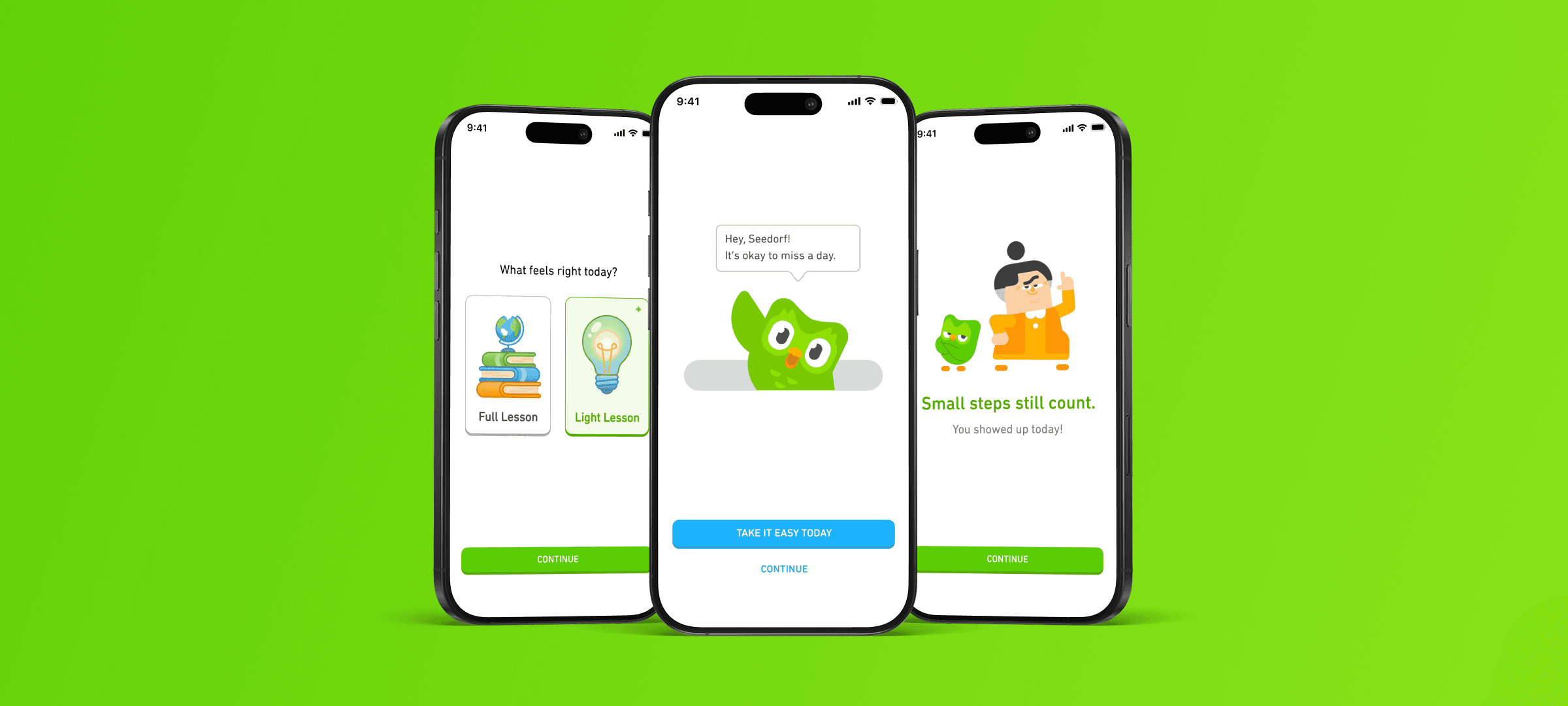
Gentle Restart
A supportive re-entry experience that helps learners return after missing a day without shame, pressure, or guilt.
TIMELINE
Oct - Dec 2025
ROLE
UX Design
TEAM
Solo
SKILLS
Figma
OVERVIEW
Streaks are one of Duolingo's most effective habit-building tools, but when a learner misses a day, the same mechanism can shift from motivation to guilt. Instead of feeling encouraged to return, users may experience shame or avoidance, making re-engagement harder. Gentle Restart explores how the return experience could be redesigned to support emotional recovery, not just streak recovery.
MY ROLE
This is a self-initiated concept project. I led the full design exploration, from framing the behavioral problem to defining interaction principles, writing microcopy, and designing high-fidelity flows. My focus was translating emotional and behavioral insights into clear interface decisions around language, tone, and user agency, while staying aligned with Duolingo's existing design language.
PROBLEM
Problem Statement
Streak breaks create an emotional barrier to returning
Duolingo's streak system reinforces daily learning through a visible progress counter. But when a learner misses a day, the same system that motivated them can become a barrier to returning. The current return experience centers on what was lost, the streak resets, and the app resumes as if nothing happened. There's no acknowledgment of the gap, no adjusted re-entry, and no emotional bridge back into learning.
For early-stage learners (weeks 2–8), this is especially costly. They haven't yet built strong enough habits for the routine to pull them back on its own. Instead, the emotional friction of confronting a broken streak leads to avoidance, users delay reopening the app, and each day away increases the likelihood they don't return at all.
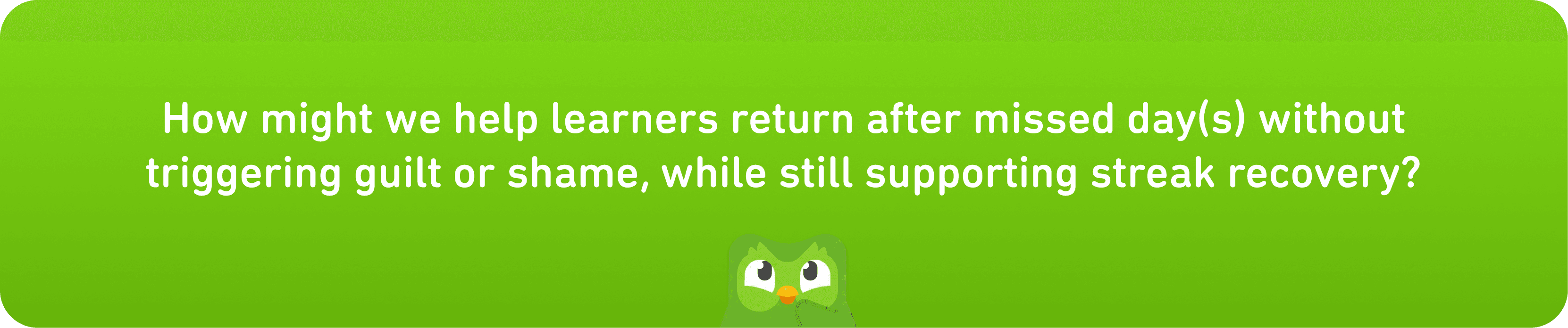
HMW
RESEARCH
Secondary Research & Behavioral Analysis
Since this is a concept project, I grounded my design direction in publicly available behavioral research, community sentiment, and Duolingo's own design philosophy.
Key Insights
Streak breaks trigger avoidance, not motivation
Streak pressure increases emotional friction
DESIGN APPROACH
Focus on Emotional Recovery rather than Streak Preservation alone.
Research showed that after missing a day, some learners feel discouraged instead of motivated. At that moment, asking users to immediately resume a full lesson can increase friction. The design approach prioritizes helping users feel safe returning before asking them to take action.
The goal is not to remove accountability, but to reduce emotional barriers that prevent learners from coming back. The approach centers on small, manageable steps that help users rebuild momentum. By lowering the effort required to return, the design supports long term habit formation instead of short term compliance.
Design Principles
SOLUTION
Gentle Restart
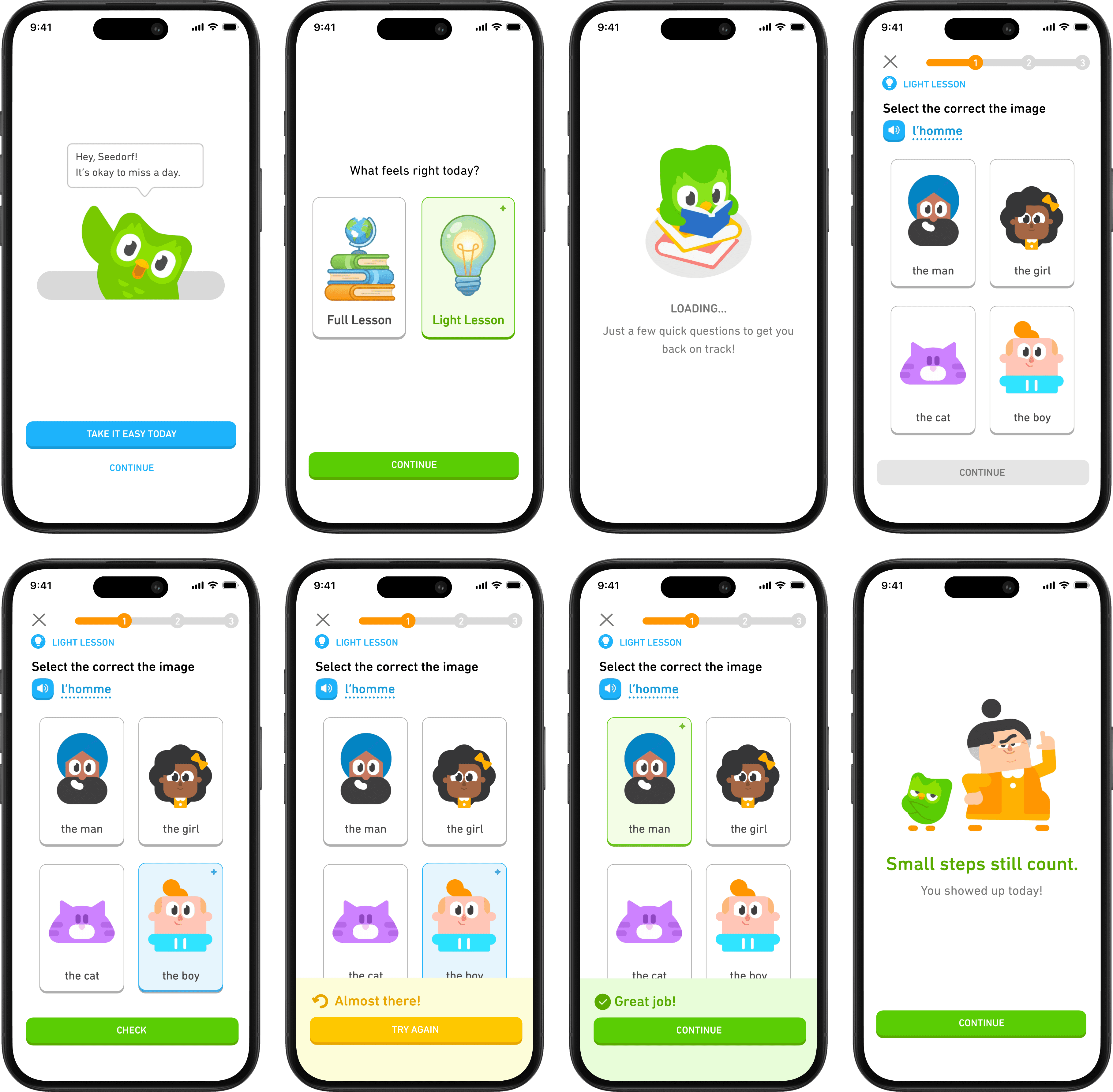
Gentle Restart introduces a supportive, low-pressure return experience that reframes missed days as part of the learning journey, while still encouraging consistency.
The solution focuses on the moment immediately after a streak break. Instead of highlighting loss or failure, the experience acknowledges the missed day and guides learners back into learning at a pace that feels manageable.
Design Goals
Reduce emotional friction that prevents users from returning
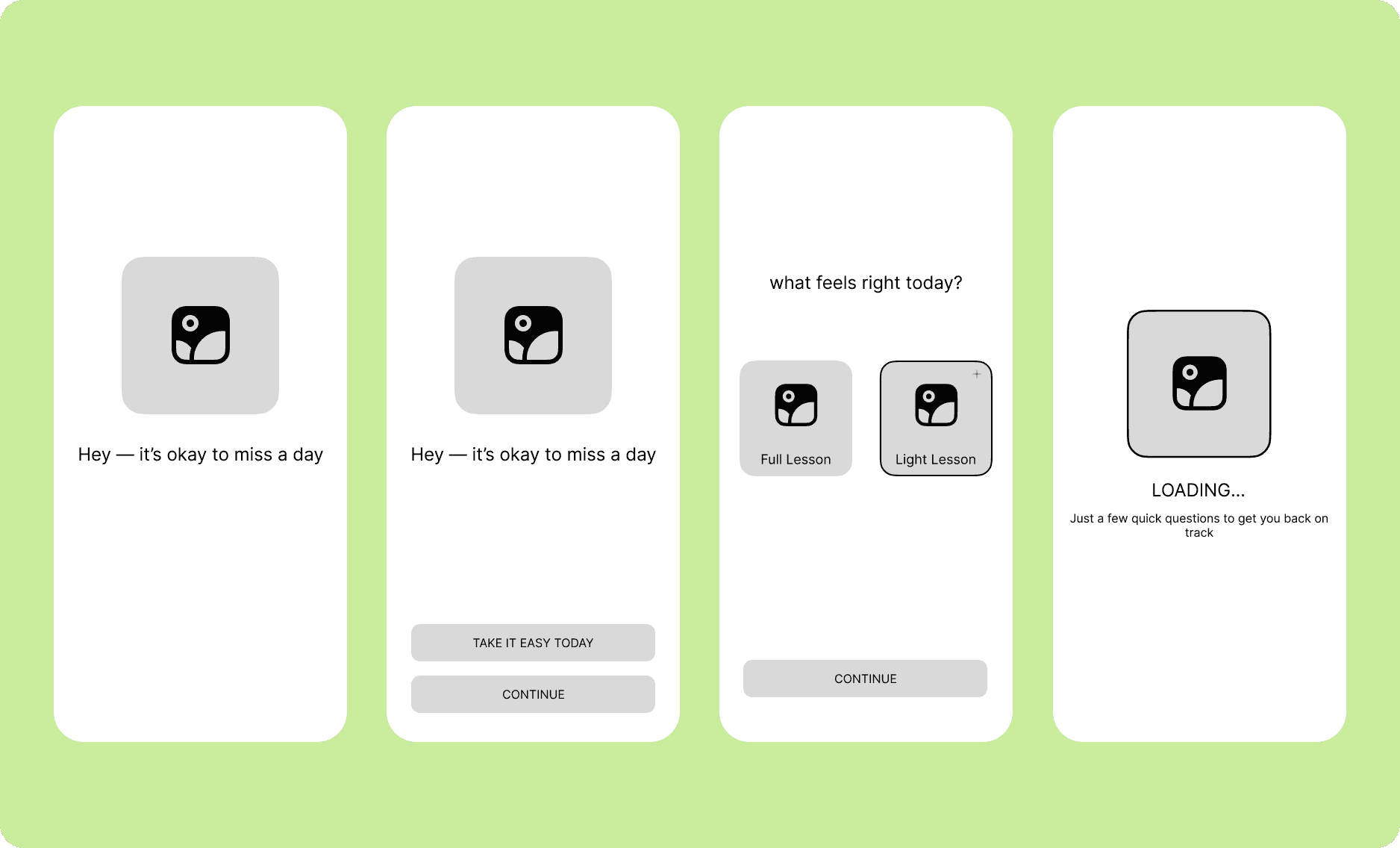
Early Exploration and Lo-Fi Iterations
What I learned from early iterations: Early explorations tested different entry points — a modal on app open, a modified home screen, and a dedicated "welcome back" flow. The modal felt intrusive; the modified home screen was too subtle. The dedicated flow struck the right balance: it acknowledged the break without blocking the user, and provided a clear but gentle path forward.
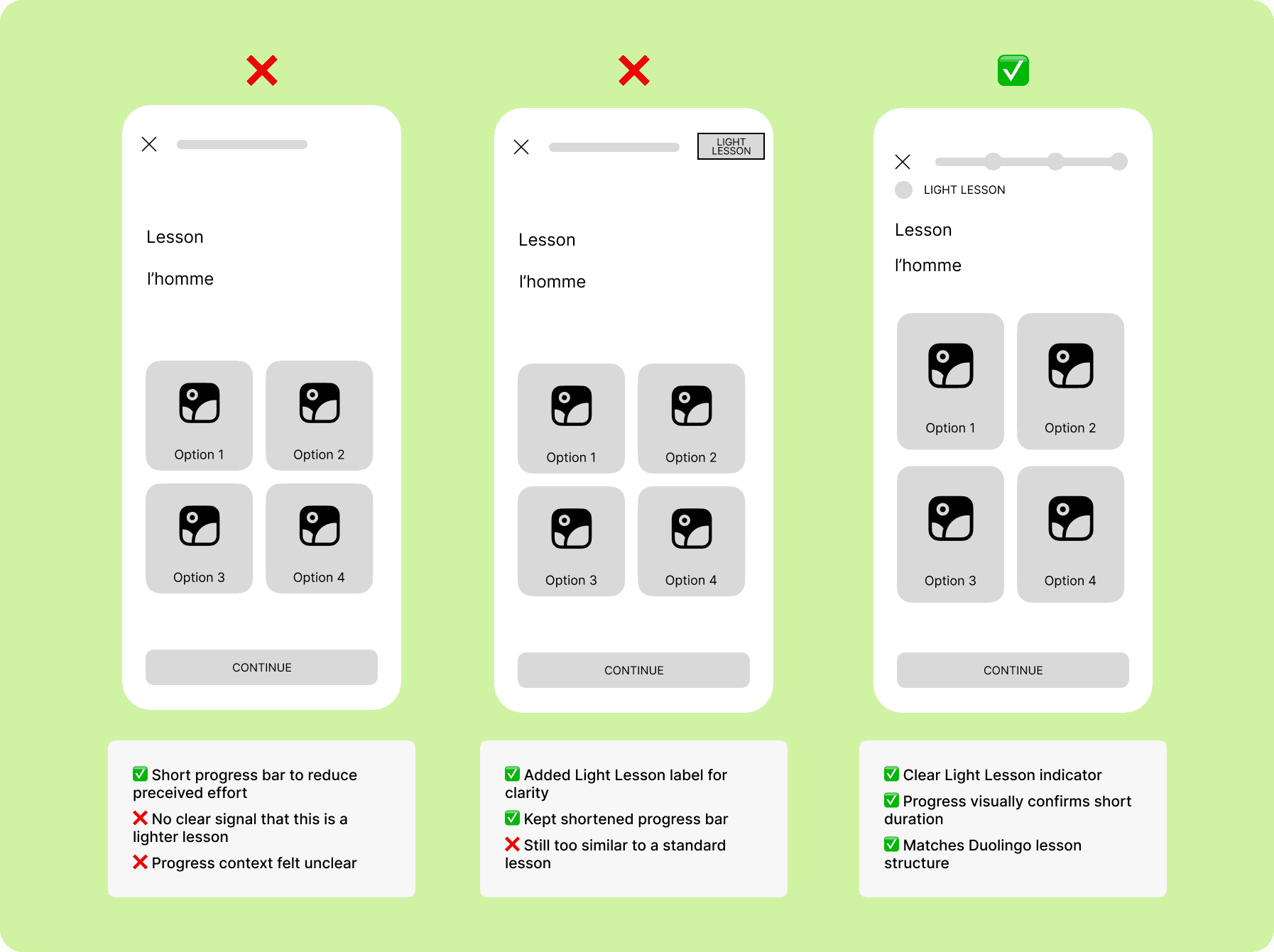
High Fidelity Designs
Language and Tone Decisions
Language sets the emotional tone of re entry. By keeping the copy calm, supportive, and low pressure, the experience encourages learners to continue without feeling punished for breaking a streak.
Used reassuring language to normalize missed days and reduce guilt
Avoided judgmental or corrective phrasing to prevent avoidance behavior
Framed the return as a choice, not an obligation
Reinforced progress by emphasizing showing up rather than performance
OUTCOME
Projected Impact & Design Rationale
As a concept project, Gentle Restart hasn't been tested with live users. However, the design decisions are grounded in established behavioral principles. If implemented, I'd hypothesize: reduced time-to-return after a missed day, lower churn among early-stage learners (weeks 2–8), and improved sentiment around the streak experience. A logical next step would be A/B testing the gentle restart flow against the current return experience, measuring return rate within 48 hours of a missed day.
REFLECTION
This project taught me how to work within an existing design system while advocating for a different emotional approach. The hardest part wasn't the UI, it was the microcopy. Every word in a return flow carries emotional weight, and small phrasing changes ("You're back" vs. "Welcome back" vs. "Ready to continue?") shift the entire tone. I also learned the value of secondary research as a starting point, community forums and app reviews surfaced emotional patterns that traditional analytics might miss.
NEXT STEPS
Explore how Gentle Restart could adapt over time (first break vs. repeated breaks)
Investigate how this approach might extend to other high-pressure features like leaderboards