
Gentle Restart
A concept feature for Duolingo focused on gentle re-entry after missed days.
TIMELINE
Oct - Dec 2025
ROLE
UX Design
TEAM
Solo Project
SKILLS
Figma
OVERVIEW
Duolingo’s Streak System is a powerful motivator, but for some learners, it can quietly become a source of pressure.
Streaks are designed to encourage daily learning and habit formation. However, when a learner misses a day, the same mechanism can shift from motivation to fear-based reinforcement. Instead of feeling encouraged to return, some users experience guilt, shame, or avoidance, and this makes it harder to re-engage with learning after a break.
MY ROLE
I led the end-to-end design exploration, from framing the behavioral problem to defining interaction principles, writing microcopy, and designing high-fidelity flows. My work focused on translating emotional insights into clear interface decisions, especially around language, tone, and user choice, while aligning with Duolingo’s habit-building philosophy.
PROBLEM
Users experience streak anxiety when they miss a day
Instead of motivating consistency, streak pressure turns into fear-based motivation, where missing a day triggers guilt or shame, increasing the likelihood that users disengage instead of returning.
When users miss a day, they often feel like they’ve “failed,” which creates emotional friction when reopening the app.
How might we help learners return after missed day(s) without triggering guilt or shame, while still supporting streak recovery?
RESEARCH
Exploratory User Survey
To better understand how streak breaks affect learner motivation, I explored how early users emotionally respond after missing a day and what helps them feel safe returning.
Key Insights
Streak breaks trigger avoidance, not motivation
Streak pressure increases emotional friction
Low commitment recovery feels safer
DESIGN APPROACH
Focus on Emotional Recovery rather than Streak Preservation alone.
Research showed that after missing a day, some learners feel discouraged instead of motivated. At that moment, asking users to immediately resume a full lesson can increase friction. The design approach prioritizes helping users feel safe returning before asking them to take action.
The goal is not to remove accountability, but to reduce emotional barriers that prevent learners from coming back. The approach centers on small, manageable steps that help users rebuild momentum. By lowering the effort required to return, the design supports long term habit formation instead of short term compliance.
SOLUTION
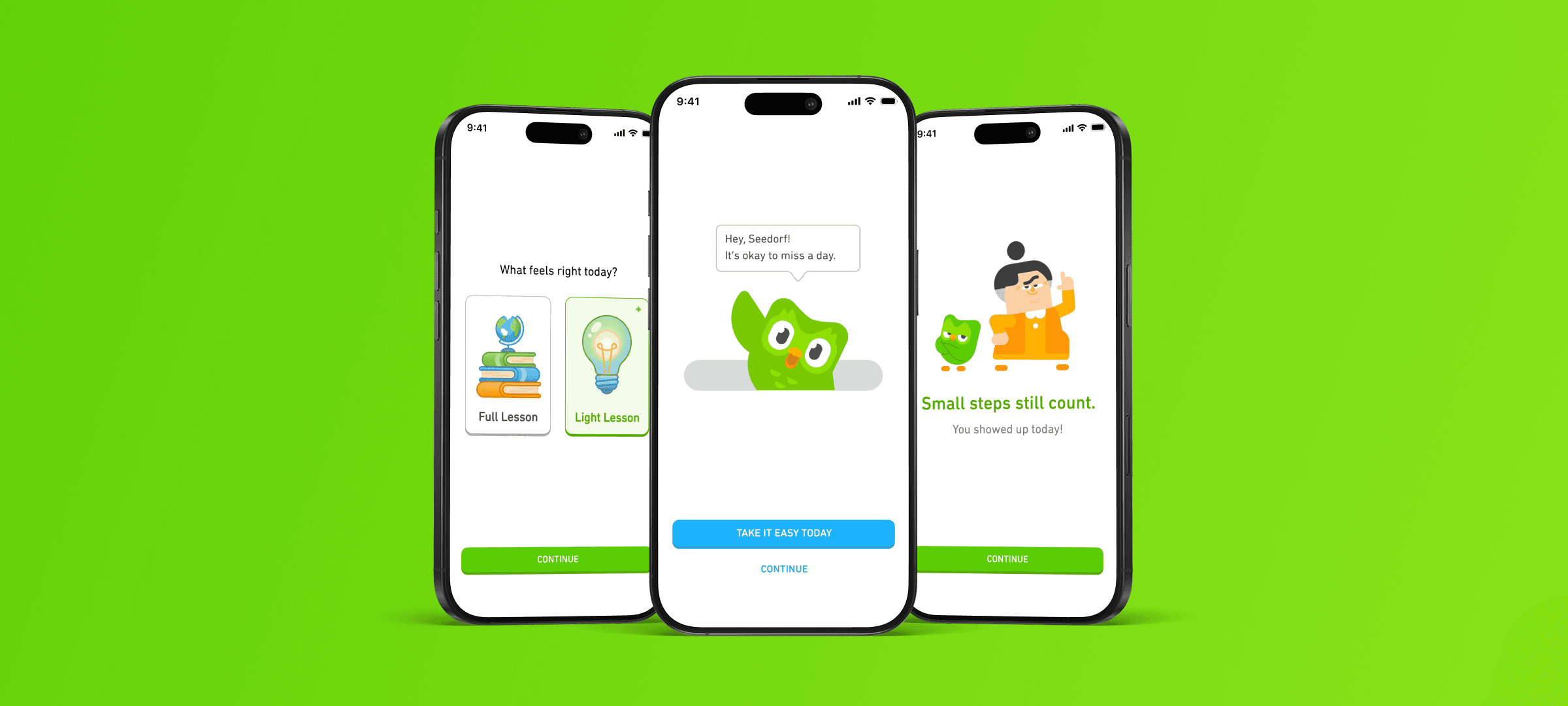
Gentle Restart
Gentle Restart introduces a supportive, low-pressure return experience that reframes missed days as part of the learning journey, while still encouraging consistency.
The solution focuses on the moment immediately after a streak break. Instead of highlighting loss or failure, the experience acknowledges the missed day and guides learners back into learning at a pace that feels manageable.
Design Goals
Reduce emotional friction that prevents users from returning
Encourage continued learning
Do not replace streak structure or accountability
Early Exploration and Lo-Fi Iterations
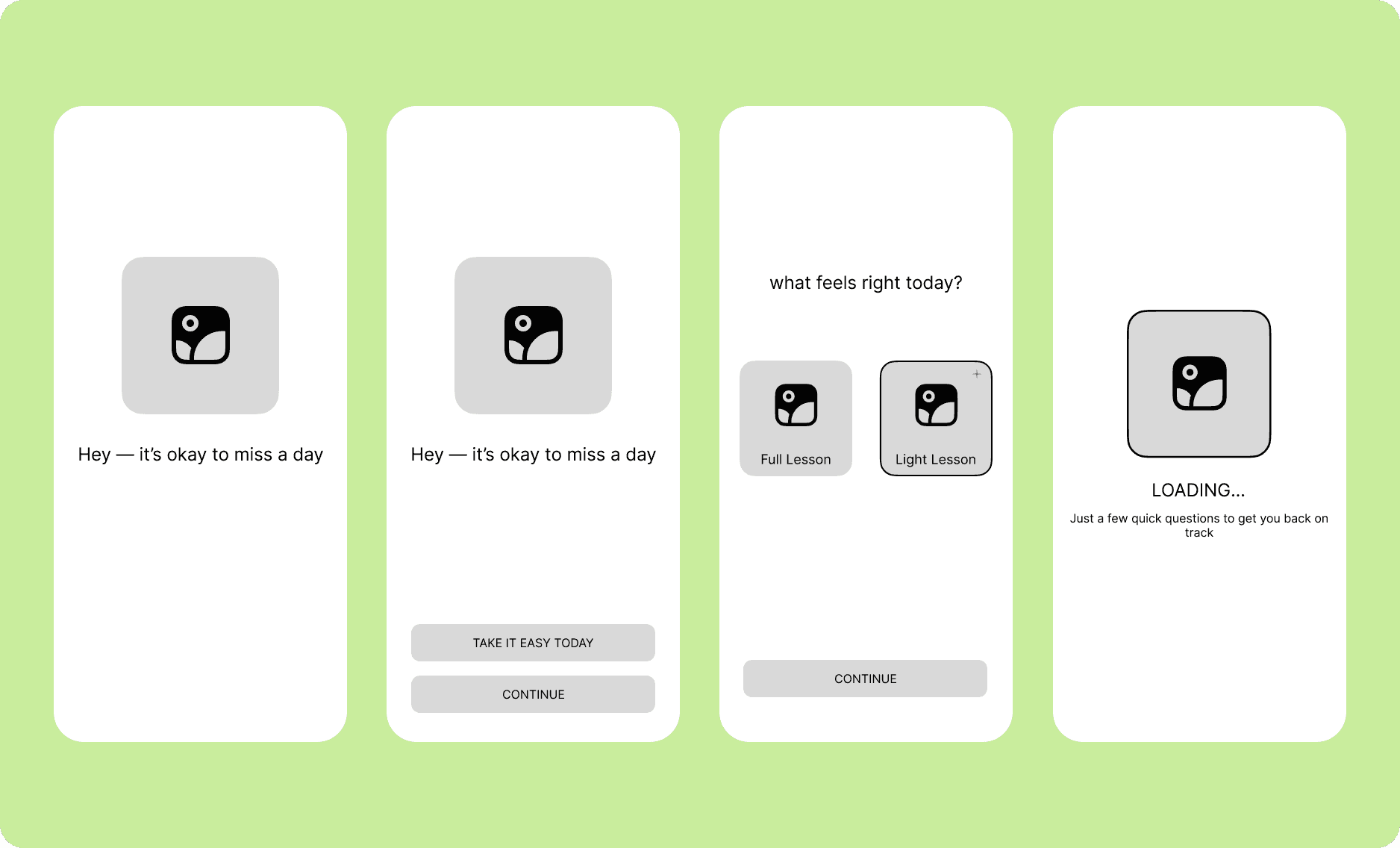
I began by exploring how a learner might re enter the app after missing a day.
Low fidelity wireframes were used to quickly test structure, language placement, and decision points without visual distraction. At this stage, the focus was on flow rather than polish.
Through iteration, one pattern became clear. Learners needed reassurance first, followed by a clear and gentle path forward.
High Fidelity Designs
Language and Tone Decisions
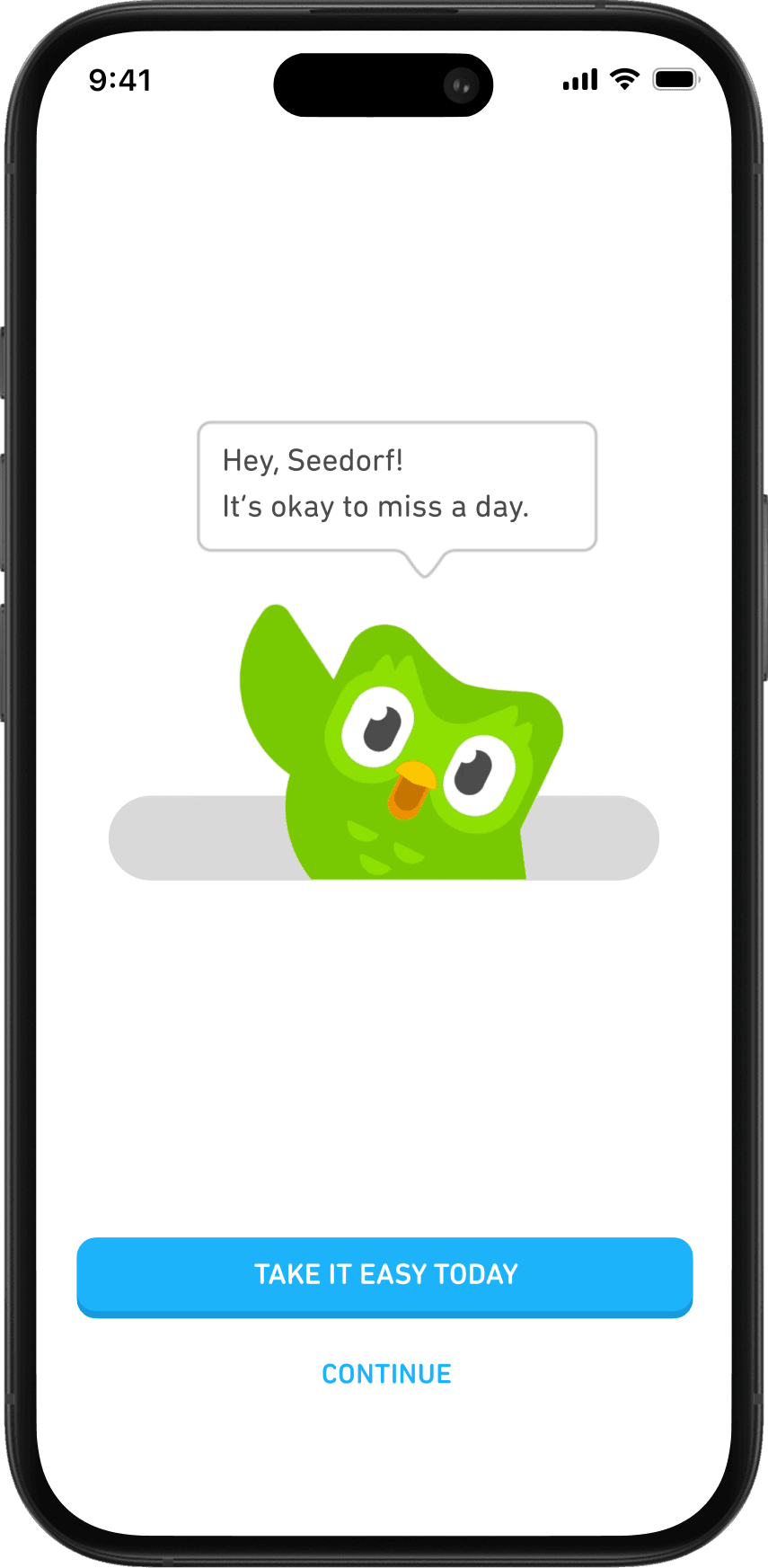
Language sets the emotional tone of re entry. By keeping the copy calm, supportive, and low pressure, the experience encourages learners to continue without feeling punished for breaking a streak.
Used reassuring language to normalize missed days and reduce guilt
Avoided judgmental or corrective phrasing to prevent avoidance behavior
Framed the return as a choice, not an obligation
Reinforced progress by emphasizing showing up rather than performance
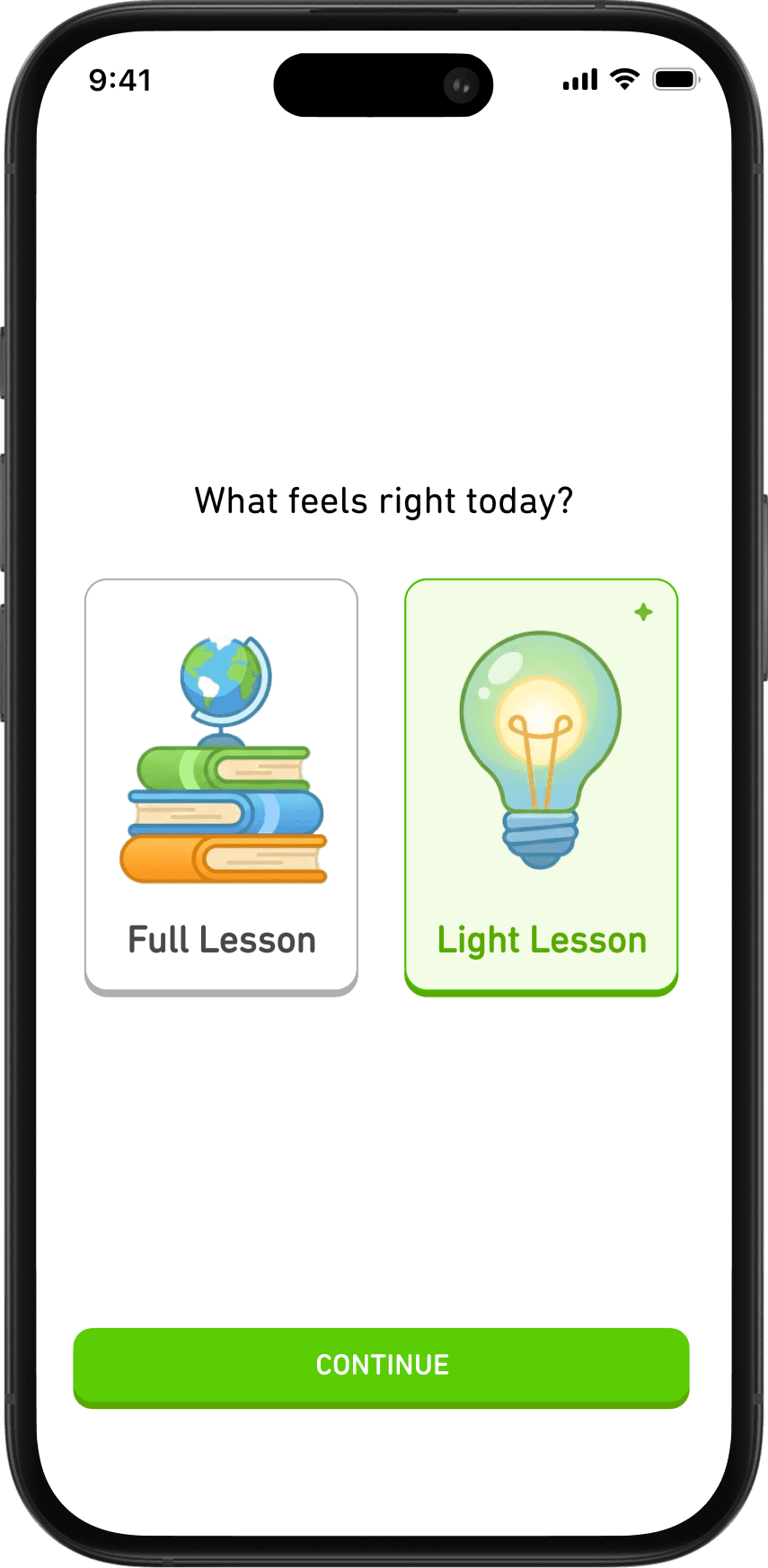
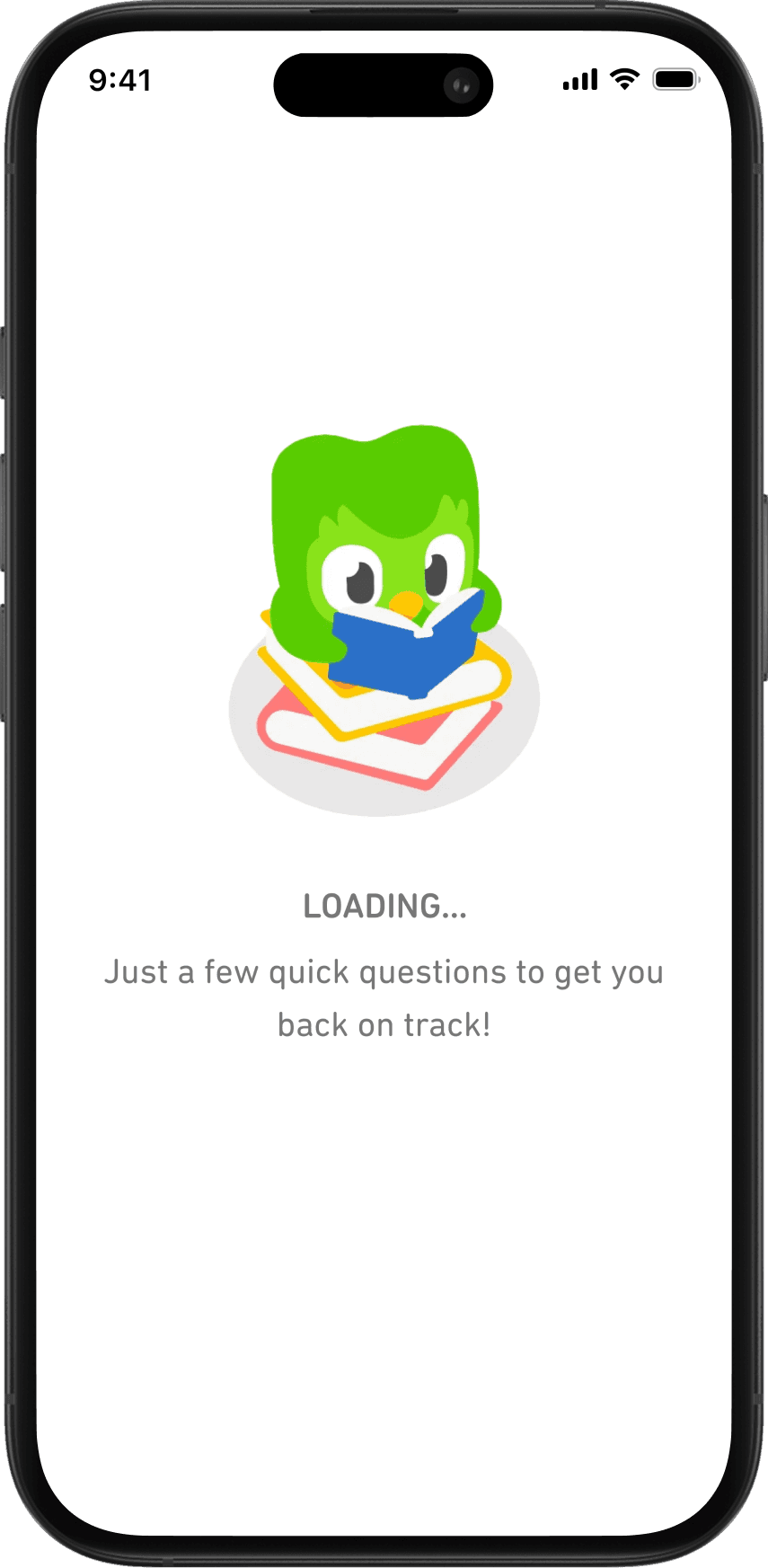
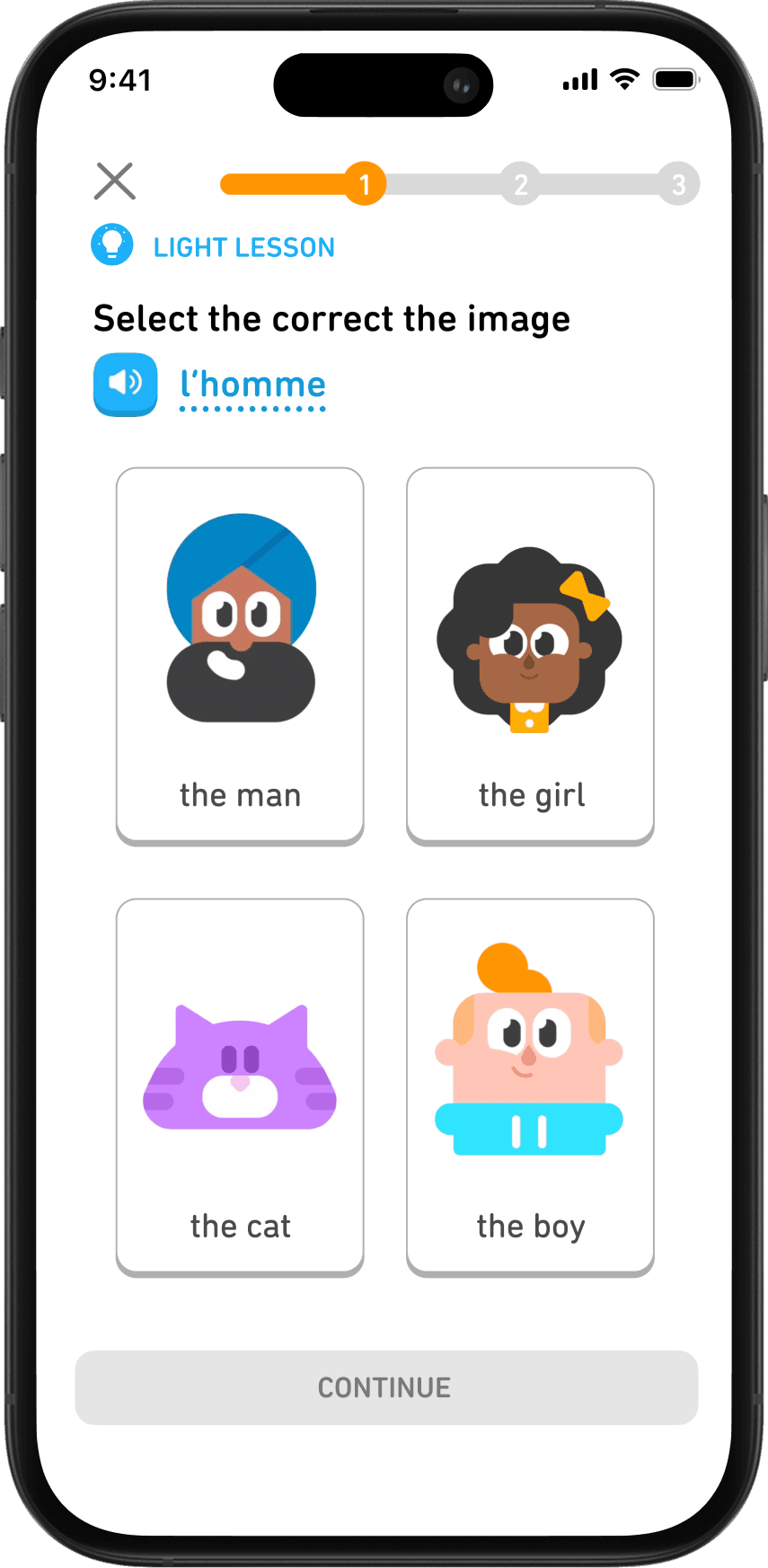
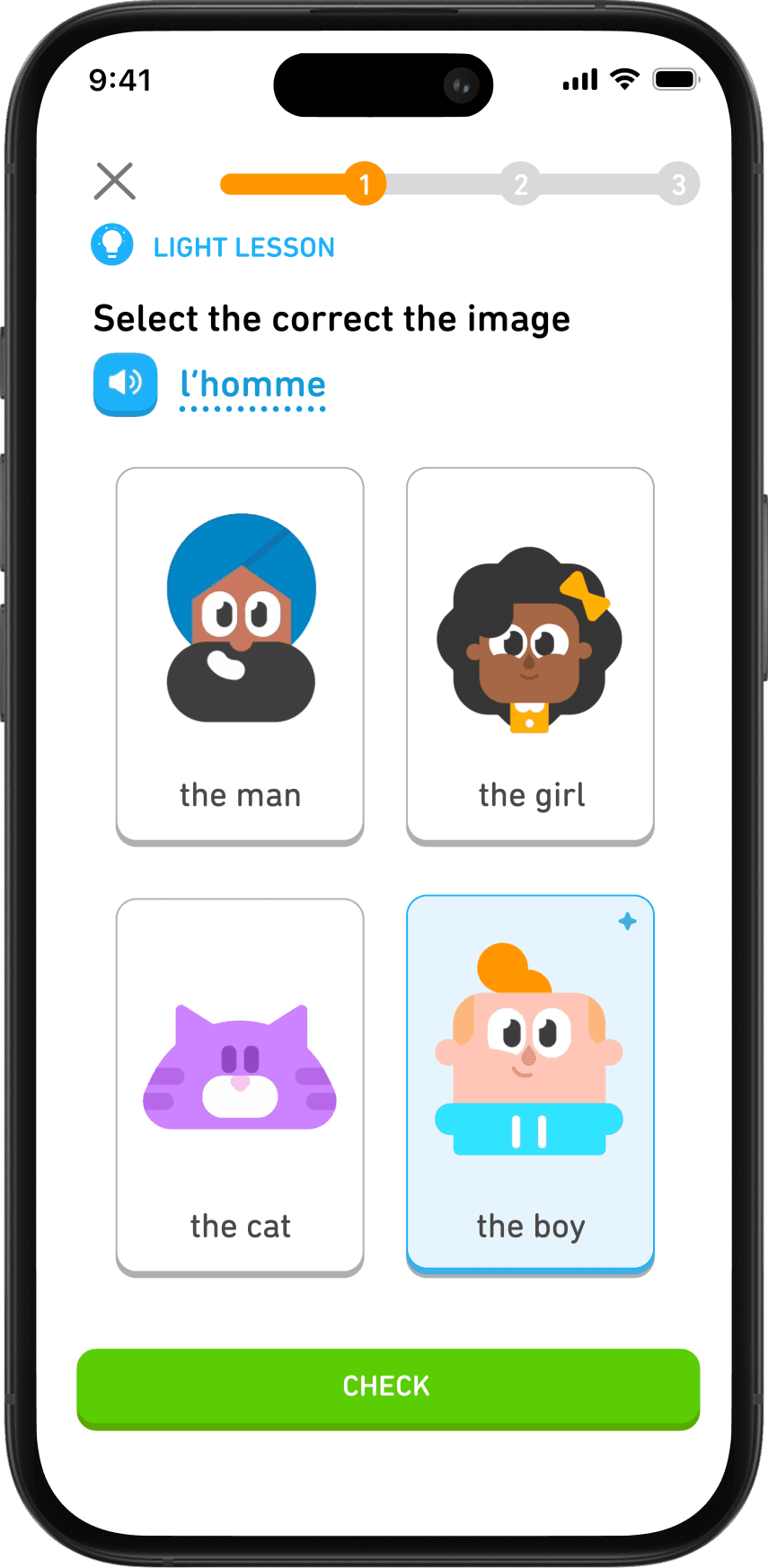
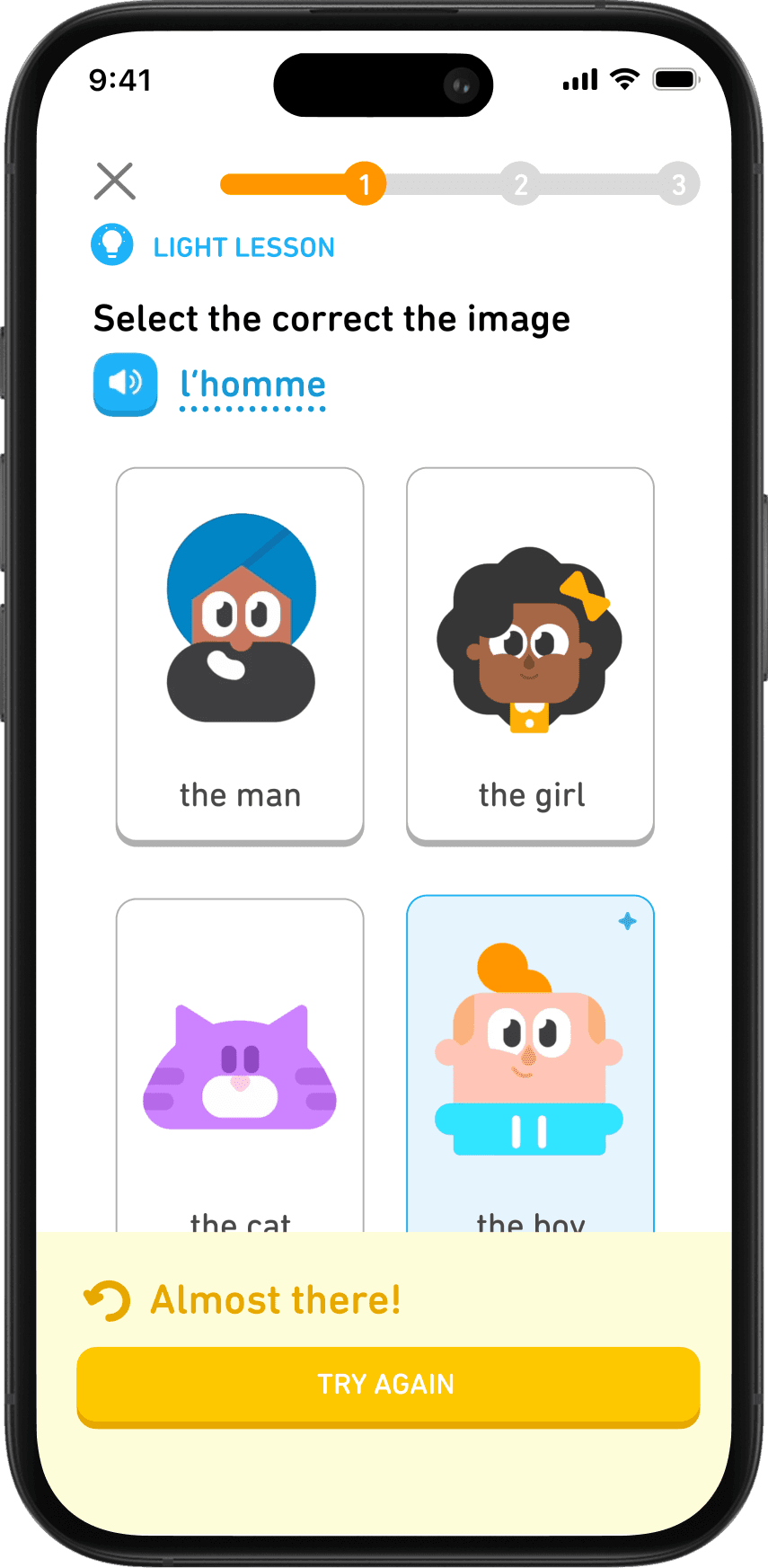
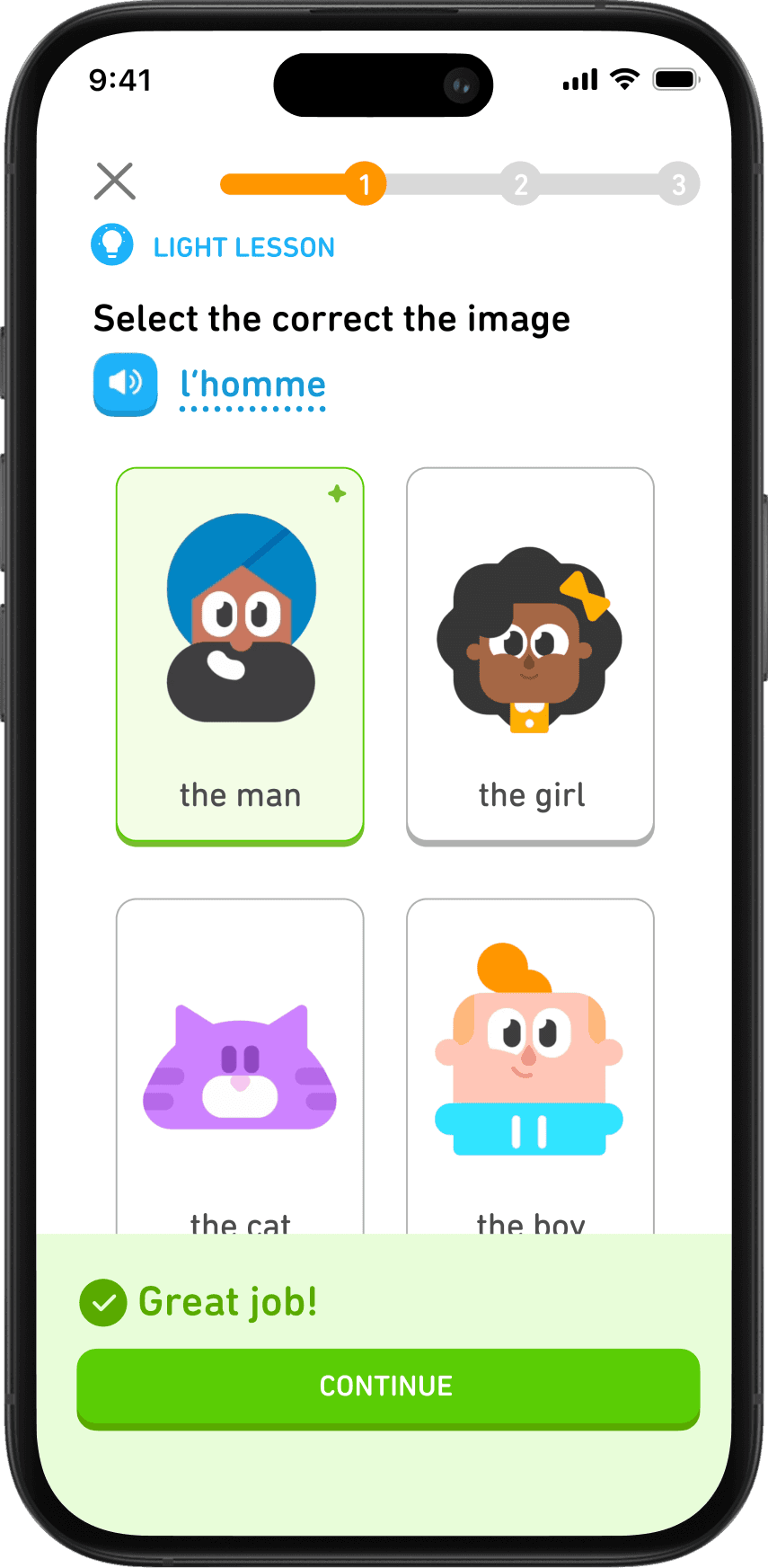
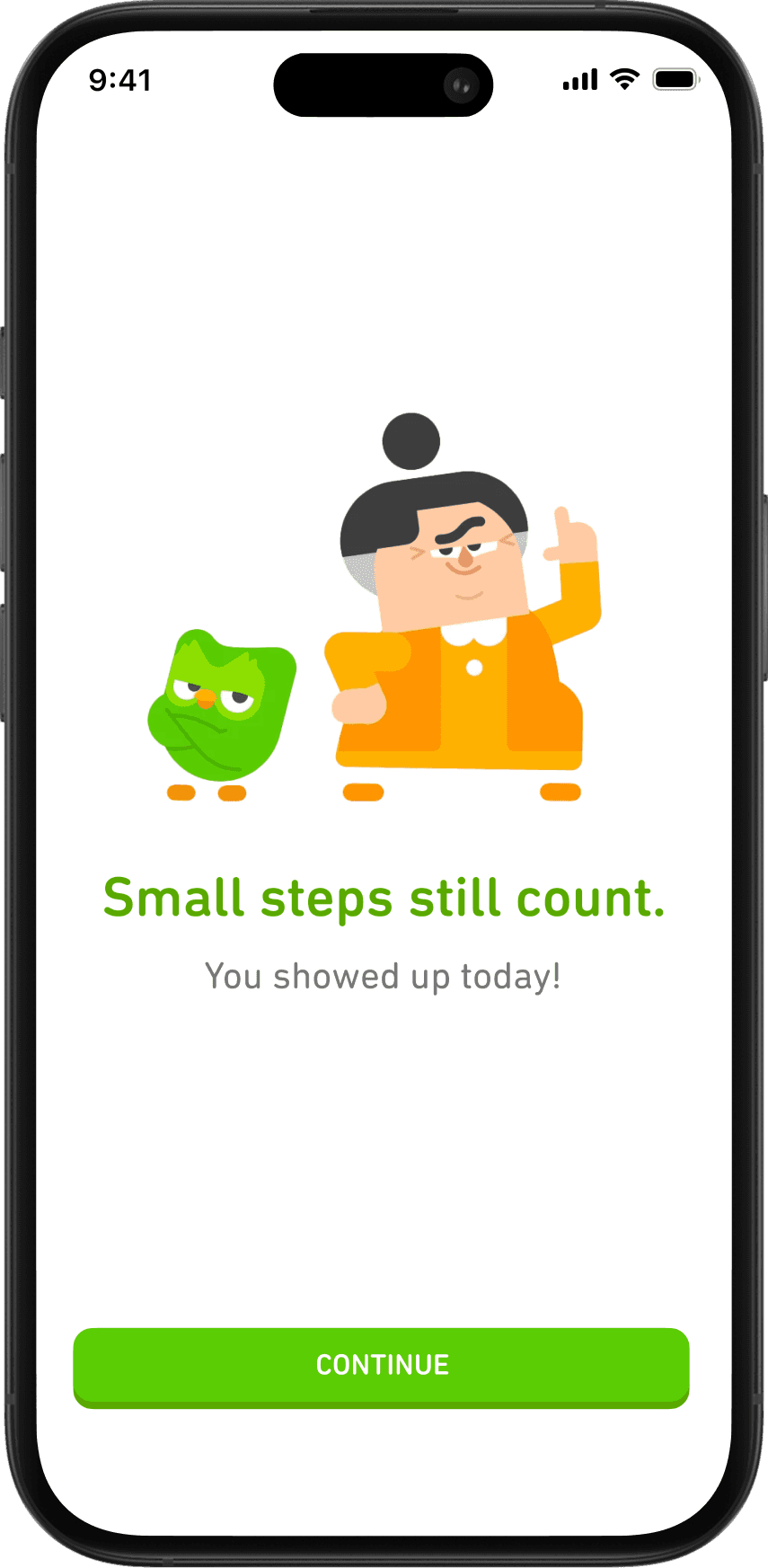
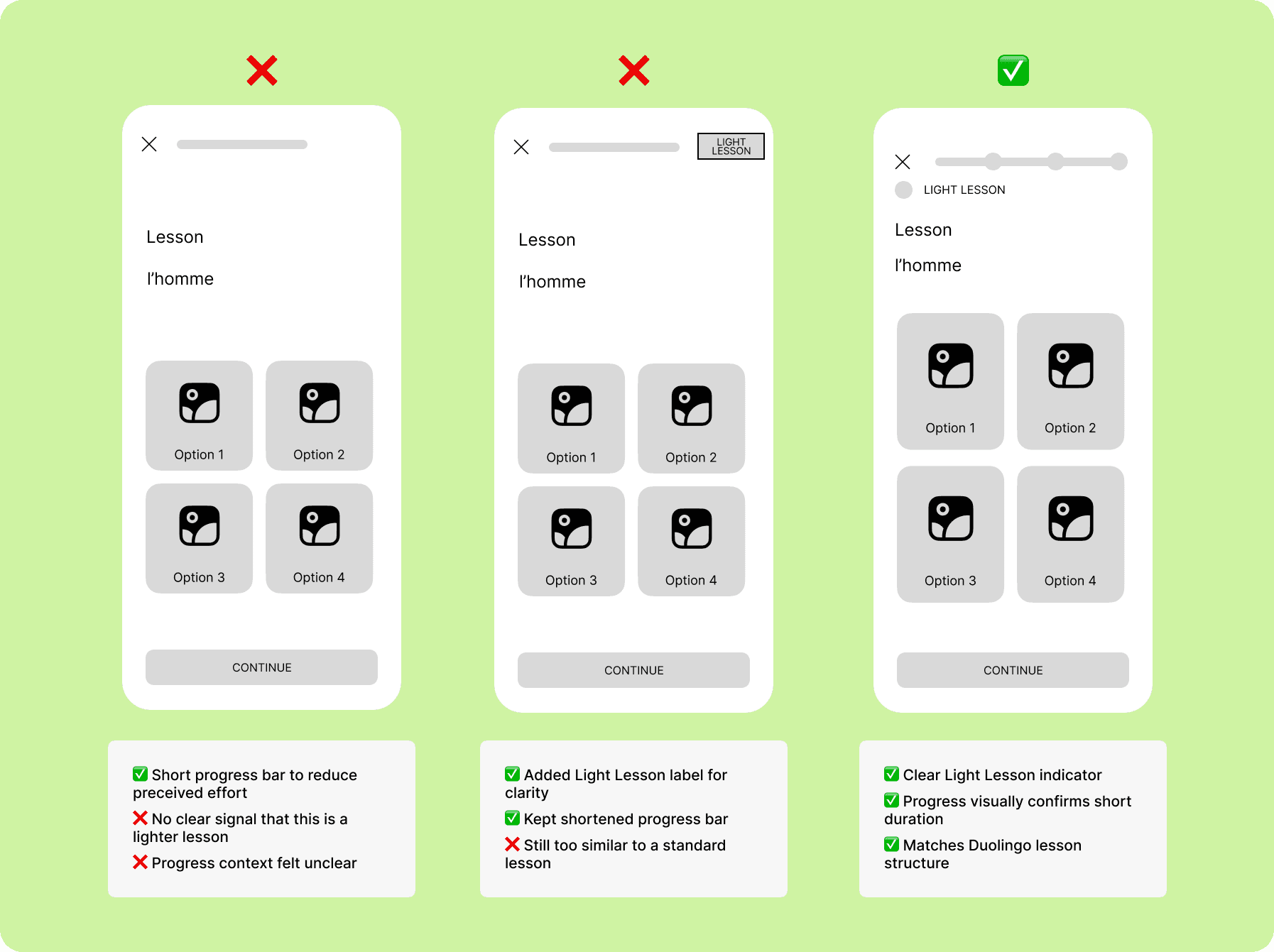
Light Lesson mode offers a lower commitment way to return.
Reduced the number of questions to clearly signal a shorter commitment
Removed high-stakes visual cues such as red error states to avoid feelings of failure
Used encouraging colors like yellow for retry states to reinforce progress
Framed incorrect answers as part of learning rather than mistakes to be corrected